
ARTICLE: Before Gallipoli, The Ottoman War Effort 1914-15

Today I thought I’d stay in the near east and bring you a unique perspective of the Turkish war effort through the eyes of the German general sent to liaise with them. This ones for lovely Vic, and his Anzac relatives…
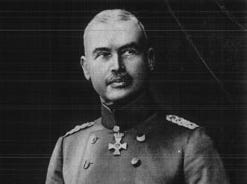
Otto Liman von Sanders was born into an originally Jewish family in what is now Poland in 1855. A career army officer, by 1913 he was a divisional commander and had received the “von” addition to his name courtesy of Kaiser Wilhelm II on his silver jubilee. It was at this point he was sent on a military mission to Constantinople.
German army personnel had been present for long enough attempting to help the Ottoman Empire modernise its army, and in 1914 Turkey was only ever going to join one side. In fact, they had agreed an alliance with the Central Powers as early as 31st July, though stalling as long as possible before having to consider military action was definitely on the cards. (You can read all about the initial skulduggery in the newly published paperback of Ring of Fire)
In the event, they held out till November, when on 5th, Britain and France declared war on Turkey. Later that month, the Turks would call for a jihad, and they officially arrived at the party. Today I wanted to use part of Liman von Sanders’s own account, published as Five Years in Turkey, to show you firstly that before Gallipoli took place, there were two other initial priorities for the Turks. Secondly, I wanted to illustrate just how imbedded in the Turkish war effort the Germans were, and give you an idea of the challenges they faced in allying themselves with Turkey, already knackered thanks to the Balkan War.
First, it’s off to the Caucasus:
In November 1914 the Third Army came in conflict with the Russians in the Caucasus.
The Third Army was commanded by Hassan Izzet Pasha.
His chief of staff was a German officer, Major Guse. Several other German officers had been assigned to this army and others were endeavouring to bring order into the very difficult communications in rear of the Third Army. Another German officer, Colonel Posseldt, had taken over the command of the so called fortress of Erzerum. He was assisted by a German artillery officer and a German engineer. A report from them arrived in Constantinople on 23rd November which painted the condition of the totally neglected fortress in the darkest colours.
Orders for the improvement of the insufficient defences were of course issued at once by the Turkish headquarters, but, as always in Turkey, the available means were limited and could not be procured without great delays.
Keep reading with a 7-day free trial
Subscribe to Alex Churchill’s HistoryStack to keep reading this post and get 7 days of free access to the full post archives.