
ARTICLE: War Ignites, 1940

I spent a weekend translating, and today I want to share with you an account of what the ‘Twilight War’, as Churchill called it, was like for someone I the French Navy. The narrator in question is Pierre Béarn, a reservist actually born as Louis-Gabriel Besnard in Bucharest in 1902. A writer, he paints a vivid picture of the frustration of the opening months of the war and the transition to all out chaos as viewed in Cherbourg…
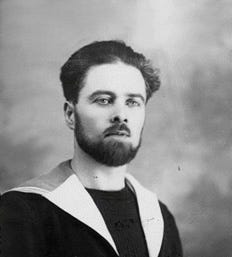
(pierrevery.fr)
Mobilisation caught me in Toulon, just as I was finishing a camping tour of France that had taken me through the Côte d’Azur and the Alps. I was due to report to Cherbourg on the fourteenth day of the war; I was in no rush to return, anticipating what everyone expected: the destruction of Paris by a swarm of planes raining down thousands of those small “Electron” incendiary bombs the newspapers had been constantly telling us about.
It is interesting to note, moreover, that none of the things expected actually happened: the instant pulverisation of cities, monstrous gases decimating populations, germ warfare, wearing down the enemy through attrition, a German revolution, the Russian steamroller, the rise of the Prince of Piedmont in Italy, immediate U.S. intervention, and so on. This proves we were living under the rule of Bluff.
On the third day of the war, I returned quite calmly to Paris. Gradually, normal life resumed; then, I received orders to remain at home until further notice. During the first three months, I knew only one image of the war. A friend of mine told me this story:
“One evening, behind our lines, a truck carrying twenty French soldiers bound for a raid had stopped alongside a wood. It was night. Weary of waiting for the moment to act, our soldiers had fallen asleep. What did they have to fear? Were there not numerous French outposts keeping watch—extending more than a kilometre in depth—between them and the Germans? Suddenly, bursting from the shadows, an enemy patrol surrounds the truck; light machine guns rattle; in the front seats, the driver and the officer slump over, riddled with bullets, while at the back, the Germans spray the truck’s interior with fire.”
Then, abruptly, I received orders to report immediately—without delay (I love that redundancy)—to the First Naval Personnel Depot in Cherbourg. It was December 17, 1940. I took it upon myself to interpret the word “immediately” as a forty-eight-hour window, and I didn’t show up until the 20th. I could just as easily have arrived on the 22nd or 23rd. However, by the very next day, I was fully outfitted in new gear; I had a kitbag—a good metre tall—stuffed with uniforms, shoes, and various brushes. I could afford to change my outfit five times! I admit that, as I logged all the items and rediscovered the routines of my twenty-year-old self, I didn’t feel particularly proud. I said to myself: “This is clearly going to last a long time; the British are right.” After all, didn’t people say: “The British are renting for three years—and they’re the ones who know! They’re never wrong! They’ve never lost a single war!”? A slogan whose futility we can appreciate today.
Keep reading with a 7-day free trial
Subscribe to Alex Churchill’s HistoryStack to keep reading this post and get 7 days of free access to the full post archives.