
FULL FEATURE: A Future General Escapes the Germans, 1914

If General Giraud’s name sounds familiar it is because 1. I’ve mentioned him before and 2. because in May 1940 he was the commander of the French Seventh Army. If you watched my stint on WW2TV you’ll know I think the Breda variant was ridiculous, but it was Giraud’s formation that were forced to carry out. (He was not a fan either).
As a result of the Fall of France, Giraud would end up a prisoner of the Germans, but it was not the first time. Eventually, he would escape in 1942 and emerge as a rival to de Gaulle, but today, I want to take you back in time to see my translation of his detailed account of being picked up off the battlefield in 1914, during the Great Retreat of August-September. I wish we’d had this when we we researching Ring of Fire…
To set that scene, after the Battle of the Frontiers, the Allies were being driven towards Paris at alarming speed. Sir John French was vacillating at the head of the BEF, and Charles Lanrezac, the French Fifth Army commander was not covering himself in glory either. One thing he did do, though, right at the end of August, was stage the most significant attempt to counter-attack the Germans before the Battle of the Marne began a week later. His men stopped, turned around and swiped the enemy with some success before heading south again to keep up with everyone else. It was during this scrap that Giraud, a captain in the 4th Zouave Regiment at the time, found himself wounded and left behind…
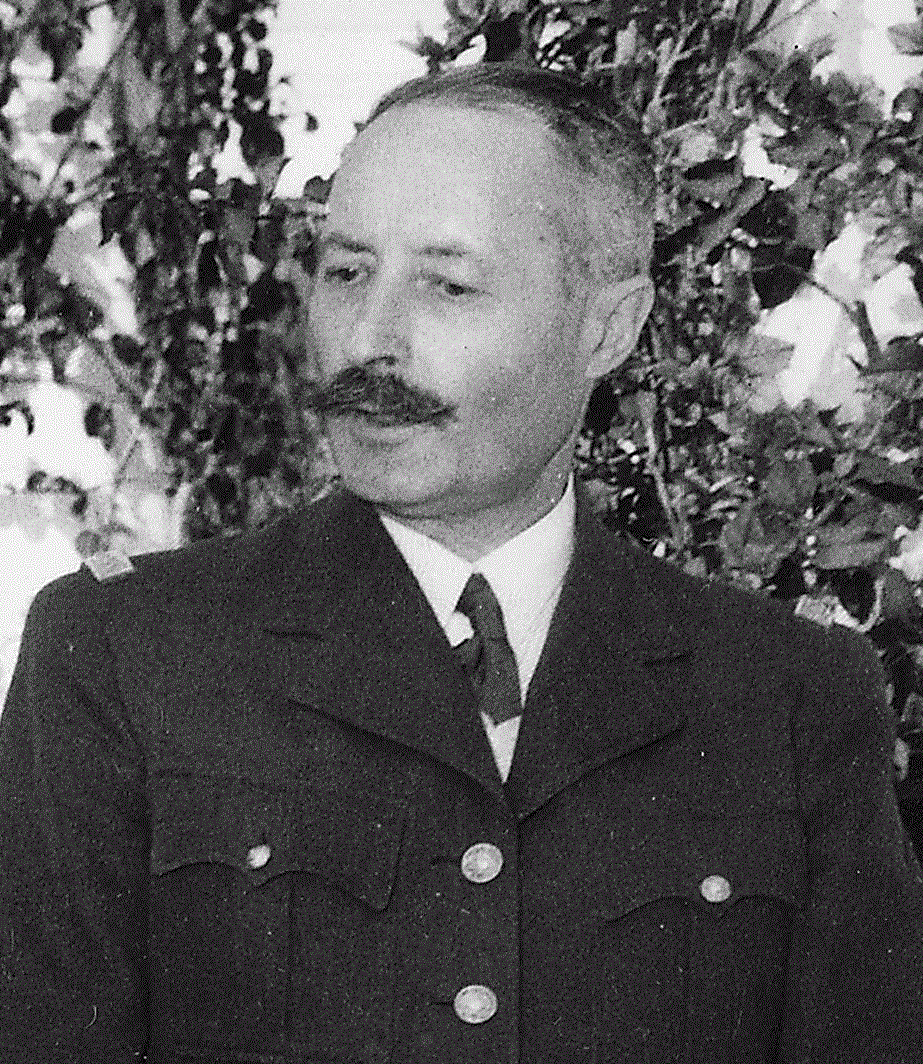
Giraud pictured at Casablanca in 1943
“Left for dead on the battlefield of Guise at 3:00p.m. on 30th August, 1914, I was picked up the following morning by German stretcher-bearers from the 14th Infantry Division—though not before being visited by a few “amateurs” who relieved the wounded of their superfluous belongings. I make no accusations; I merely state the facts, without surprise: such is war!
Transported in a cart to the field hospital set up in Origny-Sainte-Benoîte, I received the most humane and attentive care from doctors who knew their trade and practiced it conscientiously. The German orderlies were assisted by French volunteer nurses. My neighbour in the ward, Captain Schmitt, and I were placed in the care of Mademoiselle Lemaire, the daughter of the mayor of Origny. I cannot say enough about the gentleness, attentiveness, and devotion of this exquisite woman; not only did she provide the expert care needed for our recovery, but she also helped us escape in the most effective way possible, fully aware of the risks she was taking.
After suffering from purulent pleurisy, which had severely incapacitated me during the second half of September, I felt my strength returning by early October. Deeming our condition serious, the German chief medical officer had placed my friend Schmitt and me in an isolated room; apart from the daily rounds, the only person to enter was Miss Lemaire, who tended to us and brought us items from the outside that the German medical service did not provide—dairy products, stewed fruit, and cakes. At the same time, she kept us informed about hospital gossip, staff transfers, and patient evacuations. Furthermore, a resident of Origny—a prominent grain broker named M. Cléry, whose wife was also a volunteer nurse—kept us abreast of the general situation. We were kept as fully informed as possible about the Battle of the Marne, the German retreat, and the subsequent stabilisation of the front.
Then we get into the period where the BEF relocated north, and the Allies were about to face a stern test at Ypres and on the Yser…
On 10th October, Miss Lemaire warned us that the German authorities were planning to evacuate our hospital to Germany soon, where we would be interned for the duration of the war. We immediately resolved to leave the hospital as soon as possible and make our way back to free France by any means necessary. We let our nurse in on the secret. She declared herself ready to help us in every way she could. We had to start by getting fully dressed, for Schmitt and I had nothing but the nightshirts provided by the medical service—changed weekly—and a pair of indoor sandals to our names. That was hardly adequate for an escape, which explained the lax surveillance we were under. Miss Lemaire had a father and brothers whose wardrobes were certainly well-stocked. She brought us, one by one, all the items we needed to move about decently—clothing, undergarments, and shoes—each object concealed beneath the desserts in her basket and the widely unfolded napkins. The sentry at the main entrance never once had the absurd idea of looking inside that basket.
As the items arrived, the linens, clothes, and shoes were stashed between the straw pallet and the mattress of our two beds. Since Miss Lemaire was the only one who cleaned our room, no one suspected our wardrobe was gradually growing. By the end of October, it was complete. Rumours that the hospital was being evacuated were intensifying. We had to disappear as soon as possible.
Miss Lemaire had given us a detailed plan of the hospital. At our request, she had had a key made for an unguarded door leading out to the Oise Canal. Everything was ready for the escape. The plan was to leave our room as if going to the lavatory and walk past a German orderly whose bed was set up in the corridor outside our door. He mustn’t wake up... and he certainly wouldn’t. From there, we would go down to the ground floor to reach the pantry adjoining the kitchen. The designated door was right at the exit of that pantry. After that—into God’s hands! On 30th October, at 10:00a.m., we tell Miss Lemaire that the deed is set for tonight.
Keep reading with a 7-day free trial
Subscribe to Alex Churchill’s HistoryStack to keep reading this post and get 7 days of free access to the full post archives.