
FULL FEATURE: Why Allies Are More Annoying Than the Enemy, 1914

In the opening days of the war, a direct descendant of Marshal Ney tirelessly helped to unload British ships as the BEF began arriving at French ports. Legend had it that he once worked for 24 hours without so much as stopping for a power nap. Britain, France, Belgium, Russia and Serbia; five sovereign nations, had been flung into an alliance and were now preparing to fight for their lives. They were all in it together.
From the outset, the reception afforded to arriving allies was phenomenal. For one officer, it began on the transport when the grizzled French pilot came aboard to get them into port. His men burst into the national anthem. “Then, to my astonishment, they burst into the Marseillaise. How and where they had learned it I have no idea. But sing it they did, and very well too. They took that little curly bit in the middle, where a B flat comes when you least expect it. And that old chap stood on the bridge and mopped his eyes, and didn’t care who saw him do it.” George Fletcher had gone from schoolmaster to intelligence officer in the blink of an eye and was one of the first to arrive on French soil. Like everyone else in khaki, he was met with a storm of enthusiasm from French civilians lining the streets. “Our progress was punctuated by shouts of passionate welcome. Every man, woman and child blew kisses, loaded us with chocolates, pears… and wherever we walked the streets, the small children clustered round to have a chance of grasping one’s hand.” Artilleryman John Allen had to rush to find a toilet at Havre and was astonished when the woman attendant carefully wiped the seat for him. “That’s something I’d never seen in Glasgow!” The level of care and attention they received blew their minds.
The situation was the same for Frenchmen crossing into Belgium. Jacques Brunel de Perard passed over the frontier in the middle of August with an artillery unit belonging to Lanrezac’s Fifth Army: “We did not pass a house whose inhabitants had not prepared in front of their door buckets containing water, beer or milk. In the slightly larger towns, buttered bread, jams and tobacco were distributed.” At their final destination, the farmer had made coffee for everyone, and an anonymous man turned up with five barrels of beer. “A big farmer, in whose stables we put our horses, spread out fifty bales of straw.” This was in marked contrast to the woman on his own side of the border who had grumbled because she had given up twenty handfuls of hay.
Neither did the clamour die down as more and more men arrived along the French coast. Everything about the British Army was a novelty to the French. “That les anglais should really have arrived was splendid enough, but that they should also bring with them their own food and cooking arrangements: “mais c’est etonnant! et quelle organisation!” “The residents of Rouen crowded down to the quays or out to the rest camps to watch les anglais cooking their dinners! Army stores those few days were sadly depleted of tins of jam, biscuits… How could one refuse the hungry look in the eye of a motherly matron as she spied a packet of famous English tea? And the children! We learned for the first time how hungry children could be when they saw biscuits and jam… And the Scotties. Everyone knows how the lads from north of the Tweed made sad havoc among French hearts… If a Scotsman was asked once a day whether he wore anything under his kilt he was asked a hundred times. And truth compels me to add that it was generally the ladies who put the question.”
Never mind civilians. For troops, their first contact with their new comrades was scarcely less excitable. Descriptions were idealised. Gaston Pastre described passing British infantry as “handsome, strong young men, practically dressed, richly equipped; they are a pleasure to see, our allies. They mass singing a skipping and melancholy refrain; officers, pipe in mouth, cane in hand, frame the columns.” Sordet’s French cavalry corps was pointlessly marauding about the Belgian countryside. When a knackered veterinarian of the 39e Hussards first clapped eyes on their British counterparts they might as well have been riding unicorns. ‘The unexpected sight of the khaki uniforms causes a sensation… here and there horsemen in flat caps gallop nimbly across the fields; then here are two whole squadrons… we admire the impeccable dress of our allies, their practical and comfortable equipment, their magnificent cavalry, shining with health, homogeneous and robust.”
In August 1914, there was a huge gulf between the widespread reception of allies arriving to join the war effort and the operational reality of a baffling situation. Five sovereign nations, all with their own interests, priorities and war plans, suddenly thrown together in a fight that could ruin them all if it went wrong. Oh, and they were facing the terrifying spectre of what was perceived to be the most powerful army on the continent. In short, Belgium wanted to survive without being completely overrun, Britain’s priority, if pushed, would be to halt a German invasion of their own island and the French, if they were not overwhelmingly obsessed with their offensive doctrine, would put everything into not seeing Paris fall again in a repeat of the humiliation of the Franco-Prussian war…
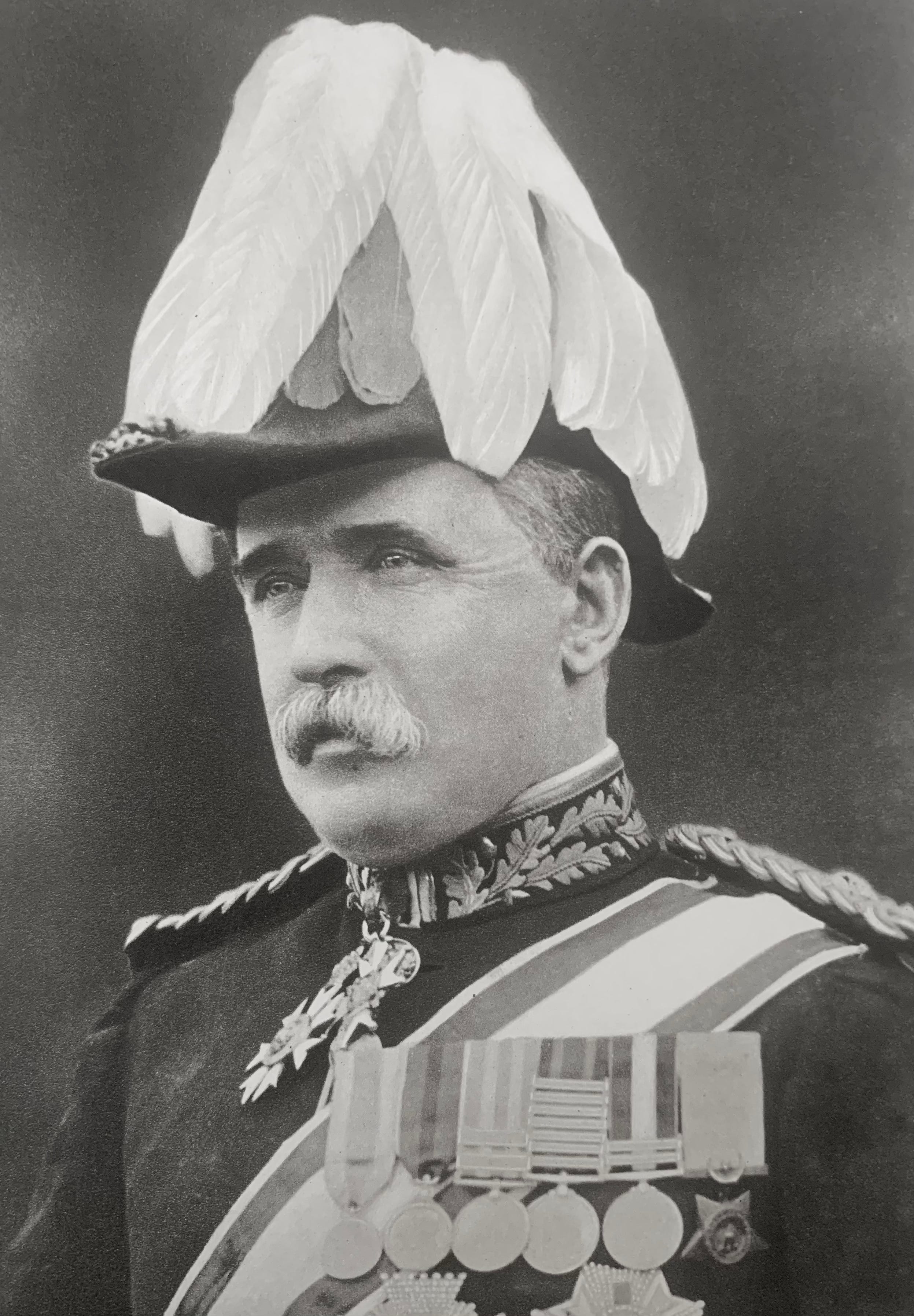
Sir John French
Keep reading with a 7-day free trial
Subscribe to Alex Churchill’s HistoryStack to keep reading this post and get 7 days of free access to the full post archives.